Flood restoration services in Winnetka that stop damage fast
Emergency water removal, extraction, and drying for Winnetka homes
When a burst pipe, appliance failure, or storm backup floods your home, flood restoration services in Winnetka from our IICRC-trained team remove the water, dry the structure, and document everything for your insurance claim. We serve homeowners and property managers across Winnetka, California, from Downtown to Hubbard Woods. Call (833) 321-7153 and we will be on site within 60 minutes.
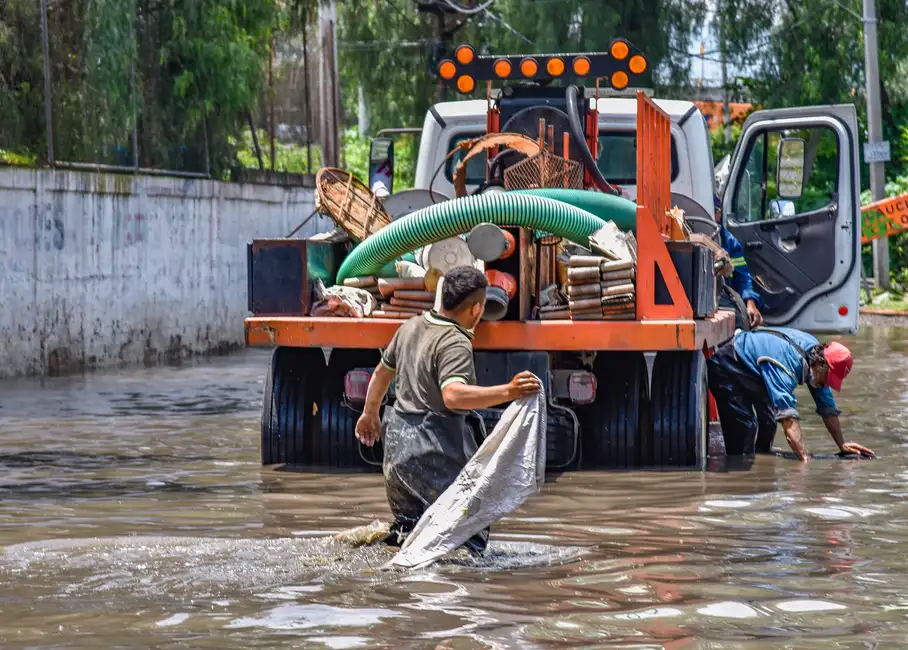
What flood restoration services in Winnetka actually involve
Flood restoration services in Winnetka is the category of emergency and structural repair work that removes standing water, dries saturated building materials, and returns a flooded home or business to pre-loss condition. It is needed whenever water enters where it should not: a supply line bursts, a water heater fails, a toilet overflows, a roof leaks during a storm, or a sewer line backs up into a basement. The work combines water extraction, moisture mapping, dehumidification, antimicrobial treatment, and repair of damaged drywall, flooring, and trim.
Winnetka homes face specific flood risks. The housing stock includes many mid-century ranches and older two-story homes with original galvanized supply lines, clay sewer laterals, and finished basements that sit below the sewer invert. Winter rain between November and March saturates the soil, and a single failed sump pump can push two inches of water across a finished basement floor in under an hour. If you are searching for water damage restoration near me after a pipe break, the first 24 to 48 hours decide whether you are drying drywall or replacing it.
Why Winnetka homeowners call us first
Flooding gets worse by the hour. Our job is to stop the spread, protect your belongings, and get your home dry enough to live in again. Here is what that looks like in practice.
Water out in hours
Our truck-mounted extraction units pull 20 to 30 gallons per minute from carpet, pad, and hardwood. In a typical 400-square-foot flooded living room, we remove standing water in 45 to 90 minutes. That speed matters because mold can begin colonizing wet drywall in as little as 24 to 48 hours.
Insurance-ready documentation
We photograph every affected room, log moisture readings at each visit, and produce a drying report your adjuster can use. Most Winnetka flood claims we handle are approved without a second inspection because the paperwork is complete from day one. You get a copy of everything we send.
Drying, not just pumping
Pumping water out is half the job. We place commercial dehumidifiers and air movers to pull moisture from wall cavities, subfloor, and framing. A standard 1,200-square-foot flood zone dries in three to five days with daily monitoring, and we do not remove equipment until readings confirm the structure is dry.
Local crews, no call center
We are based in Winnetka and dispatch from here, not from a national call center three states away. That means a real local technician answers, knows the neighborhoods from Hubbard Woods to The Village Center, and can be at your door within 60 minutes for most addresses.
What to expect from our flood restoration process
From the first phone call to the final moisture reading, here is the sequence we follow on every flood job in Winnetka. You will know what is happening, who is in your home, and how long each stage takes.
Emergency call
You call (833) 321-7153 and speak to a live technician, not a voicemail. We ask what flooded, how deep the water is, and whether the source is still running. Within minutes we dispatch a crew and give you an arrival window. For most Winnetka addresses, that window is 45 to 60 minutes.
Inspection and stop
On arrival we shut off the water source if it is still active, then walk the affected area with a moisture meter and thermal camera. We map the flood line, check wall cavities, and identify any hidden migration into adjacent rooms. This inspection takes 20 to 30 minutes and tells us exactly how much area we are drying.
Water extraction
We move furniture, lift carpet where possible, and run truck-mounted extractors across the floor. Standing water and saturated pad come out first, then we use weighted extraction on carpet that can be saved. A typical basement flood cleanup of 600 square feet takes two to three hours to extract.
Drying and monitoring
We set commercial dehumidifiers and air movers based on the size of the wet area, usually one dehumidifier per 1,000 cubic feet plus one air mover per 10 to 16 linear feet of wall. You will see us daily for moisture readings. Most structures reach dry standard in three to five days.
Repairs and handoff
Once readings confirm the structure is dry, we remove equipment and complete the repairs: drywall patches, baseboard replacement, paint, and flooring. We provide a final drying report with before-and-after readings, photos, and a summary you can hand to your insurance adjuster. Then your home is yours again.
Four years of Winnetka flood restoration experience
Water Damage Restoration Winnetka has been restoring flooded homes since 2022. In that time our technicians have completed hundreds of flood restoration jobs across the San Fernando Valley, from small toilet overflow cleanup to full basement flood cleanup after winter storms. Our team holds IICRC Water Damage Restoration Technician (WRT) and Applied Structural Drying (ASD) certifications, and we follow the IICRC S500 standard for every drying project. We carry commercial-grade extraction and drying equipment on every truck, and we know the building stock here: the older plumbing, the finished basements, and the drainage patterns that cause repeat flooding on certain streets.
- IICRC WRT and ASD certified technicians on every flood restoration crew
- Hundreds of completed flood jobs in Winnetka and surrounding San Fernando Valley neighborhoods since 2022
- Commercial truck-mounted extraction units capable of removing 20 to 30 gallons per minute
- Thermal imaging and pin-type moisture meters used to find hidden water behind walls and under floors
- Direct experience with insurance documentation for California homeowners policies
Why choose our flood restoration services in Winnetka
Flood restoration is not a commodity. The crew you call determines whether your home dries in three days or gets torn apart in three weeks. Here is what sets our Winnetka team apart.
60-minute response
We dispatch from Winnetka, so most addresses in Downtown, Hubbard Woods, and The Village Center see a crew within 60 minutes. That speed limits how far water migrates into walls and under floors. Every hour of delay adds roughly 10 to 15 percent to the total affected area.
IICRC-certified drying
Our technicians hold IICRC WRT and ASD certifications and follow the S500 standard for water damage restoration. That means we dry to a documented standard, not by feel. You get moisture readings at every visit and a final report showing your structure reached dry standard.
Insurance claim support
We document the loss with photos, moisture maps, and daily logs, then send the package directly to your adjuster. Most Winnetka flood claims we handle are approved on the first submission. If your adjuster has questions, we answer them directly so you are not stuck in the middle.
Repairs handled in-house
After drying, we repair the drywall, baseboard, paint, and flooring we removed. You do not have to coordinate a separate contractor or wait weeks for someone else to show up. One crew, one schedule, one point of contact from the first call to the final walkthrough.
What our flood restoration services include
Every flood restoration job in Winnetka starts with the same core scope: stop the water, extract what is standing, dry the structure, and document the loss for your insurance. From there, the job expands based on how far the water traveled and what materials it touched. Here is what is included in a standard flood restoration project.
What's Included
Emergency water extraction
Truck-mounted extraction units remove standing water from carpet, pad, hardwood, and concrete at 20 to 30 gallons per minute. We also use weighted extraction on carpet that can be saved, pulling water from the backing and pad before it wicks into the subfloor.
Structural drying
Commercial dehumidifiers and air movers dry wall cavities, subfloor, and framing. We place equipment based on the size of the wet area and monitor moisture daily. Most structures reach dry standard in three to five days, and we do not remove equipment until readings confirm it.
Antimicrobial treatment
After extraction, we apply EPA-registered antimicrobial to affected surfaces to inhibit mold growth. This is standard on every flood job because mold can begin colonizing wet drywall within 24 to 48 hours. Treatment takes about 30 minutes per room and dries clear.
Moisture mapping and documentation
We use thermal cameras and pin-type meters to map the flood line and find hidden moisture behind walls and under floors. Every reading is logged, photographed, and included in a drying report you can send to your insurance adjuster.
Damage repairs
Once the structure is dry, we repair what the water damaged: drywall patches, baseboard replacement, paint, and flooring. We handle these repairs in-house so you are not coordinating a second contractor or waiting weeks for someone else to schedule the work.
Flood problems we solve for Winnetka homeowners
Flooding is not just water on the floor. It is a chain reaction that starts with moisture and ends with mold, rot, and expensive repairs if nothing stops it. Here are the problems we see most often in Winnetka and how we solve them.
Standing water spreading into adjacent rooms
Every hour water sits, it wicks further into drywall and subfloor. A single room can become three rooms in a day, and the repair bill grows with every square foot.
We extract standing water at 20 to 30 gallons per minute and set containment barriers to stop the spread. Most rooms are dry to the touch within two to three hours, and we map the flood line so nothing hidden gets missed.
Mold appearing days after the water is gone
Mold can start growing within 24 to 48 hours of a flood. Once it takes hold in drywall or insulation, the material usually has to be removed, adding thousands to the repair cost.
We apply EPA-registered antimicrobial after extraction and dry the structure to a documented standard. If mold is already present, we handle the remediation with the same crew, including HEPA filtration and removal of contaminated materials.
Insurance claim denied or delayed
Adjusters need moisture readings, photos, and a drying log to approve a flood claim. Without that documentation, claims get delayed for weeks or denied outright.
We photograph every affected room, log moisture readings at each visit, and produce a complete drying report. Most Winnetka flood claims we handle are approved on the first submission, and we answer adjuster questions directly.
Sewage backup contaminating a basement
Sewage is category 3 water and carries bacteria and pathogens. Cleaning it without proper protective gear and antimicrobial treatment leaves a health hazard behind.
Our sewage cleanup service uses full protective gear, removes contaminated materials, and treats the area with hospital-grade antimicrobial. We also check the sewer lateral for the blockage that caused the backup so it does not happen again.
When to call for flood restoration services
A pipe bursts behind a bathroom wall and water runs into the hallway carpet
We shut off the water, cut into the wall to access the pipe, extract water from the carpet and pad, and set drying equipment in the wall cavity and hallway. The repair includes new drywall, paint, and carpet pad.
The hallway and bathroom are dry in four days, and the wall is repaired and painted by day eight. You avoid mold growth and a much larger repair bill.
A winter storm overwhelms the sump pump and floods a finished basement
We extract standing water from the carpet, remove saturated pad, and set dehumidifiers and air movers across the basement. We check the sump pump and discharge line, then dry the drywall and baseboards.
The basement is dry in five days and the finished surfaces are restored within two weeks. The sump issue is corrected so the next storm does not repeat the flood.
A toilet overflows on the second floor and water drips through the ceiling below
We extract water from both floors, cut out the saturated ceiling drywall, and dry the joists and subfloor. Antimicrobial treatment goes on every affected surface, and we repair the ceiling once it is dry.
Both floors are dry in four days, and the ceiling is patched and painted by day ten. The repair is invisible when we are done.
A slow refrigerator ice maker leak rots the kitchen subfloor over several months
We find the leak with a thermal camera, extract the trapped water, and dry the cabinet bases and subfloor. Damaged sections of subfloor and toe kick are replaced, and the leak line is repaired.
The kitchen is dry in three days and fully repaired in ten. Catching it before the cabinets failed saved the homeowner a full kitchen remodel.
Equipment and methods we use
Tools & Equipment
Truck-mounted water extractors
These units pull 20 to 30 gallons per minute from carpet, pad, and hardwood. They are the fastest way to remove standing water and the reason we can clear a flooded room in under two hours.
Commercial LGR dehumidifiers
Low-grain refrigerant dehumidifiers pull moisture from the air and from saturated materials. We run one per 1,000 cubic feet of affected space and monitor output daily to confirm the drying is on track.
High-velocity air movers
Air movers create a vortex of warm, dry air across wet surfaces to accelerate evaporation. We place one every 10 to 16 linear feet of wall and reposition them at each monitoring visit for even drying.
Thermal imaging cameras
Thermal cameras reveal temperature differences caused by hidden moisture behind walls, under floors, and in ceilings. They let us find water that a visual inspection would miss, so we dry the whole problem, not just the visible part.
Pin-type and pinless moisture meters
These meters give us exact moisture content readings in drywall, wood, and concrete. We log readings at every visit and use them to decide when the structure has reached dry standard and equipment can be removed.
HEPA air scrubbers
HEPA scrubbers filter airborne mold spores, dust, and debris during remediation and drying. We run them in containment when mold is present or when we are removing contaminated materials.
EPA-registered antimicrobials
Applied after extraction to affected surfaces, these products inhibit mold and bacterial growth. They are standard on every flood job and dry clear without leaving a residue or odor.
Methods
IICRC S500 standard
The IICRC S500 is the industry standard for water damage restoration. It defines how to classify water, inspect and monitor moisture, and determine when a structure has reached dry standard. We follow it on every flood restoration job in Winnetka.
Moisture mapping and daily monitoring
We map the flood line with thermal cameras and moisture meters on day one, then log readings at every visit. This tells us exactly where the water traveled and gives us objective data to decide when drying is complete.
Containment and negative air
When mold or sewage is present, we build containment barriers and run HEPA scrubbers to create negative air pressure. This keeps spores and contaminants from spreading to unaffected parts of your home during removal and drying.
Antimicrobial application
After extraction and before drying, we apply EPA-registered antimicrobial to affected surfaces. This inhibits mold and bacterial growth during the drying period, when wet materials are most vulnerable to colonization.
Drying verification
We do not remove equipment based on a calendar. We remove it when moisture readings confirm the structure has reached dry standard, which means the drywall, subfloor, and framing are back to normal moisture content.
How flood restoration services run in Winnetka
Winnetka sits in the San Fernando Valley, where winter rain between November and March is the main flood driver. The soil here is clay-heavy and drains slowly, so a two-inch storm can saturate a yard and push water against foundations and into basements. Many homes were built in the 1950s and 1960s with galvanized supply lines and clay sewer laterals that are now at the end of their service life. When a galvanized line fails, it usually fails inside a wall, and the water runs down into the lower floor before anyone notices. We also see a lot of finished basements with sump pumps that cannot keep up during a heavy storm. If your sump fails at 2 a.m., you need emergency water cleanup before sunrise, not a callback the next afternoon. We dispatch from Winnetka and know which streets flood first, which sewer laterals are prone to root intrusion, and how the older plumbing in this housing stock tends to fail. That local knowledge means we bring the right equipment on the first trip and do not waste time figuring out your home.
Service Areas
Older commercial and residential buildings with original plumbing. We see frequent supply line failures and sewer backups in the basements along the main corridors.
Many mid-century ranches with finished basements and sump pumps. Winter storms regularly overwhelm these systems, and we handle several basement flood cleanups here each rainy season.
Larger homes on sloped lots where water runs down and pools against foundations. Foundation seepage and crawl space moisture are common after heavy rain.
A mix of residential and small commercial properties. Toilet overflows and kitchen supply line leaks are the most frequent calls we get from this area.
Properties near the corridor see more stormwater runoff. We check drainage and grading on every flood job here because the water often comes from outside, not from a plumbing failure.
Local Considerations
Clay-heavy soil that drains slowly after winter storms
Water pools against foundations and finds cracks, flooding basements and crawl spaces. We check exterior drainage and grading as part of every flood restoration job in these areas.
Galvanized supply lines in homes built before 1970
These lines corrode from the inside and fail without warning, often inside a wall. The water runs down into lower floors, so we use thermal cameras to trace the full path before we start drying.
Clay sewer laterals prone to root intrusion
Roots find the joints in old clay laterals and cause backups that flood basements with category 3 water. We treat these as sewage cleanup jobs with full protective gear and antimicrobial treatment.
Finished basements with sump pumps that fail during heavy rain
A failed sump pump can put two inches of water across a finished basement floor in under an hour. We extract fast and check the pump and discharge line so the problem does not repeat.
Burst supply line in a Downtown Winnetka kitchen
A galvanized supply line failed behind the kitchen wall at 11 p.m., sending water under the cabinets and into the hallway carpet. By morning, the hallway carpet was soaked and the cabinet toe kick was swollen.
We extracted 40 gallons of water, dried the cabinet bases and subfloor in three days, and replaced the damaged toe kick and carpet pad. The homeowner was back to normal use of the kitchen within a week.
Maintenance & Follow-up
We recommended replacing the remaining galvanized lines in the home to prevent a repeat failure. The homeowner scheduled the repipe within the month.
A January storm overwhelmed the sump pump and put two inches of water across 600 square feet of finished basement. The carpet, pad, and lower drywall were saturated, and the homeowner called at 2 a.m.
We extracted the standing water in 90 minutes, removed the saturated pad, and dried the drywall and framing in five days. The baseboards and carpet were replaced, and the basement was fully restored in two weeks.
Maintenance & Follow-up
We installed a battery backup sump pump and a water alarm. The homeowner has not had a flood since, even through the following winter.
A toilet overflow on the second floor sent water through the ceiling of the unit below. Both floors had standing water, and the ceiling drywall was sagging by the time the tenant called.
We extracted water from both floors, cut out the saturated ceiling drywall, and dried the joists and subfloor in four days. The ceiling was patched, textured, and painted by day ten.
Maintenance & Follow-up
We checked the toilet flange and wax ring, which had failed and caused the overflow. Replacing the wax ring solved the problem and prevented a repeat.
How much do flood restoration services in Winnetka cost?
Most residential flood restoration jobs in Winnetka run $1,200 to $6,500, with the average around $2,800. Small toilet overflow cleanup or a single-room water extraction typically lands at the low end. A full basement flood cleanup with several days of drying and repairs pushes toward the high end. Your insurance usually covers the drying and repair work, and we bill the carrier directly for covered losses.
How long does water extraction and drying take?
Water extraction takes two to four hours for a typical room. Structural drying takes three to five days. We monitor moisture daily and do not remove equipment until readings confirm the structure reached dry standard. If your home has thick carpet, a finished basement, or extensive drywall saturation, plan on the full five days. We give you a realistic timeline on day one.
Do I need to leave my home during flood restoration?
In most cases, no. If the flooding is limited to a basement, kitchen, or bathroom, you can stay in the unaffected part of the house. We set up containment barriers and run dehumidifiers that are loud but safe. If sewage is involved or the water affected your only bathroom and kitchen, we will tell you honestly whether staying is practical.
Can you help with mold remediation after water damage?
Yes. Mold can start growing within 24 to 48 hours of a flood, so we treat every job as a mold risk. If we find mold during the drying process, we handle the remediation with the same crew and equipment. That includes HEPA filtration, antimicrobial treatment, and removal of contaminated drywall or insulation. You do not need a separate contractor.
Certifications and reviews
Certifications
Reviews
Called at midnight when our water heater burst and flooded the garage and laundry room. The technician answered live, gave us a 45-minute window, and showed up in 40. They extracted the water, set up drying equipment, and came back every day for four days. The final report made our insurance claim easy.
Our basement flooded after a storm and we had no idea where to start. This crew walked us through the whole process, from extraction to drying to the repairs. They were honest about what insurance would cover and what it would not. The basement looks better than it did before the flood.
I manage rental properties in Winnetka and have used this team twice. Both times they documented everything with photos and moisture readings, which made the insurance process simple. They handled a two-floor toilet overflow in one visit and kept me updated by text the whole time.
A pipe burst behind our bathroom wall and water ran into the hallway. They found the leak with a thermal camera, cut into the wall, and dried everything in four days. The drywall repair and paint job is invisible. I would not call anyone else for flood restoration in Winnetka.
Related Services
emergency water removal
When water is still standing, emergency water removal is the first step of flood restoration services in Winnetka. We pump out basements, kitchens, and garages within 60 minutes, then transition straight into drying and repairs.
emergency water removalmold remediation after water damage
Mold can appear within 48 hours of a flood. Our mold remediation after water damage service uses HEPA filtration, antimicrobial treatment, and removal of contaminated materials, often as part of the same flood restoration job.
mold remediation after water damagewater leak restoration
A slow supply line leak can rot framing for months before you notice. Water leak restoration finds the source, dries the hidden cavity, and repairs the damage, preventing the kind of structural decay that turns a small leak into a major flood restoration project.
water leak restorationemergency water cleanup
Emergency water cleanup covers the immediate response: stopping the source, extracting standing water, and sanitizing affected surfaces. It is the front half of flood restoration services in Winnetka and the part that limits how much of your home is affected.
emergency water cleanupwater extraction
Water extraction uses truck-mounted units to pull 20 to 30 gallons per minute from carpet, pad, and hardwood. It is the fastest way to remove standing water and the step that determines how quickly your home can begin drying.
water extractionwater damage mitigation
Water damage mitigation is everything we do to stop the damage from spreading: extraction, containment, drying, and antimicrobial treatment. It is the emergency phase of flood restoration services in Winnetka and the phase that saves the most money.
water damage mitigationtoilet overflow cleanup
A toilet overflow can dump 30 to 50 gallons into a bathroom and hallway in minutes. Our toilet overflow cleanup removes the water, sanitizes the area, and dries the subfloor, often completing the job in a single day.
toilet overflow cleanupbasement flood cleanup
Finished basements in Winnetka flood from sump failures, sewer backups, and foundation seepage. Basement flood cleanup removes water from carpet and drywall, dries the space, and restores the finished surfaces so you can use the room again.
basement flood cleanupwater damage restoration near me
If you are searching for water damage restoration near me in Winnetka, we are the local crew. We dispatch from Winnetka and reach most addresses within 60 minutes, with the equipment and certifications to handle the full restoration.
water damage restoration near mewater cleanup services
Our water cleanup services cover everything from a small appliance leak to a full basement flood. We extract, dry, sanitize, and repair, handling the entire job with one crew and one point of contact.
water cleanup services24-hour water restoration near me
Floods do not wait for business hours. Our 24-hour water restoration near me service means a live technician answers at 2 a.m. and a crew is dispatched immediately, so water is not sitting in your home overnight.
24-hour water restoration near mewater extraction company
As a local water extraction company, we carry truck-mounted units and commercial drying equipment on every vehicle. That means we start extracting the moment we arrive, not after a second trip to pick up gear.
water extraction companyrapid water extraction
Rapid water extraction is about speed: we remove standing water at 20 to 30 gallons per minute, which limits how far it wicks into walls and floors. Faster extraction means less demolition and a shorter drying time.
rapid water extractionkitchen water damage repair
Kitchen floods come from supply lines, dishwashers, and refrigerator ice makers. Kitchen water damage repair finds the source, dries the cabinets and subfloor, and repairs the damage before mold takes hold behind the toe kick.
kitchen water damage repairceiling water damage repair
Ceiling water damage repair addresses the stains, sagging drywall, and insulation damage caused by roof leaks or upstairs plumbing failures. We dry the cavity, replace the damaged drywall, and repaint so the repair disappears.
ceiling water damage repairsewage cleanup
Sewage backups are category 3 water and require full protective gear, antimicrobial treatment, and removal of contaminated materials. Our sewage cleanup service handles the hazard safely and restores the affected area.
sewage cleanupcrawl space mold removal
Crawl space mold removal targets the dark, damp spaces under Winnetka homes where mold thrives after a flood. We remove contaminated insulation, treat the framing, and install ventilation or encapsulation to keep it from returning.
crawl space mold removalattic mold remediation
Attic mold remediation handles the mold that grows when roof leaks or condensation saturate attic insulation. We remove the affected materials, treat the framing, and correct the moisture source so the mold does not come back.
attic mold remediationwater damage remediation after fire
Water damage remediation after fire addresses the water left behind by firefighting efforts. We extract standing water, dry the structure, and remove smoke and water damage together, so your home is fully restored in one job.
water damage remediation after fireCall now for flood restoration services in Winnetka
Water spreads fast, and every hour of delay adds cost and damage. Our IICRC-certified crew is based in Winnetka and ready to dispatch 24 hours a day. Call (833) 321-7153 now and we will be at your door within 60 minutes.